EngineeringResearch
Advanced Agent-to-Agent Communication Protocols
Deep dive into the sophisticated communication protocols that enable seamless collaboration between AI agents in complex workflows.
Kye Gomez12 min read

Deep dive into the sophisticated communication protocols that enable seamless collaboration between AI agents in complex workflows.
In the world of multi-agent systems, communication is everything. The ability for agents to exchange information, coordinate actions, and collaborate effectively determines the success or failure of the entire system. In this deep dive, we'll explore the sophisticated communication protocols that power Swarms' multi-agent architecture.
Traditional client-server communication patterns don't scale well in multi-agent environments. Agents need to:
At the heart of Swarms' communication system is a message-oriented architecture that treats all interactions as asynchronous message exchanges.
#[derive(Clone, Serialize, Deserialize)]
pub struct Message {
    pub id: Uuid,
    pub sender: AgentId,
    pub recipients: Vec<AgentId>,
    pub content: MessageContent,
    pub priority: Priority,
    pub timestamp: DateTime<Utc>,
    pub ttl: Duration,
}

#[derive(Clone, Serialize, Deserialize)]
pub enum MessageContent {
    Task(Task),
    Result(Result),
    Status(Status),
    Control(ControlCommand),
    Heartbeat(Heartbeat),
}In hierarchical agent structures, communication flows through a well-defined chain of command.
// Manager agent coordinates worker agents
impl Agent for ManagerAgent {
    async fn process_message(&mut self, message: Message) -> Vec<Message> {
        match message.content {
            MessageContent::Task(task) => {
                // Distribute task to workers
                let worker_messages: Vec<Message> = self.workers
                    .iter()
                    .map(|worker_id| Message::new(
                        self.id.clone(),
                        vec![worker_id.clone()],
                        MessageContent::Task(task.clone())
                    ))
                    .collect();

                worker_messages
            }
            MessageContent::Result(result) => {
                // Aggregate results from workers
                self.results.push(result);

                if self.results.len() == self.workers.len() {
                    // All workers completed, send final result
                    vec![Message::new(
                        self.id.clone(),
                        vec![self.parent_id.clone()],
                        MessageContent::Result(self.aggregate_results())
                    )]
                } else {
                    vec![]
                }
            }
        }
    }
}For collaborative tasks, agents communicate directly with each other.
// Peer agents collaborate on shared tasks
impl Agent for PeerAgent {
    async fn process_message(&mut self, message: Message) -> Vec<Message> {
        match message.content {
            MessageContent::Task(task) => {
                // Work on assigned portion of task
                let result = self.process_task_portion(task).await;

                // Share result with peers
                let peer_messages: Vec<Message> = self.peers
                    .iter()
                    .map(|peer_id| Message::new(
                        self.id.clone(),
                        vec![peer_id.clone()],
                        MessageContent::Result(result.clone())
                    ))
                    .collect();

                peer_messages
            }
        }
    }
}For system-wide announcements and coordination.
// Coordinator broadcasts system updates
impl Agent for CoordinatorAgent {
    async fn broadcast_update(&mut self, update: SystemUpdate) {
        let broadcast_message = Message::new(
            self.id.clone(),
            self.all_agent_ids.clone(),
            MessageContent::Control(ControlCommand::SystemUpdate(update)),
            Priority::High,
            Duration::from_secs(60)
        );

        self.send_message(broadcast_message).await;
    }
}// Batch multiple messages for efficiency
pub struct MessageBatch {
pub messages: Vec<Message>,
pub batch_id: Uuid,
pub created_at: DateTime<Utc>,
}
impl MessageBatch {
pub fn add_message(&mut self, message: Message) {
self.messages.push(message);
}
pub fn should_flush(&self) -> bool {
self.messages.len() >= 100 ||
self.created_at.elapsed() > Duration::from_millis(50)
}
}#[derive(Clone, Serialize, Deserialize)]
pub struct MessageTrace {
pub message_id: Uuid,
pub path: Vec<AgentId>,
pub timestamps: Vec<DateTime<Utc>>,
pub latencies: Vec<Duration>,
pub errors: Vec<Error>,
}Effective communication is the foundation of successful multi-agent systems. By implementing sophisticated protocols that handle reliability, performance, and security, Swarms enables developers to build complex AI systems that can scale to meet the demands of modern enterprise applications.
The communication protocols we've built are designed to be:
As multi-agent systems become more prevalent in enterprise applications, the importance of robust communication protocols will only grow. Swarms is committed to advancing the state of the art in agent communication, enabling developers to build the next generation of AI applications.
For more information about Swarms' communication protocols, visit our documentation or join our Discord community.
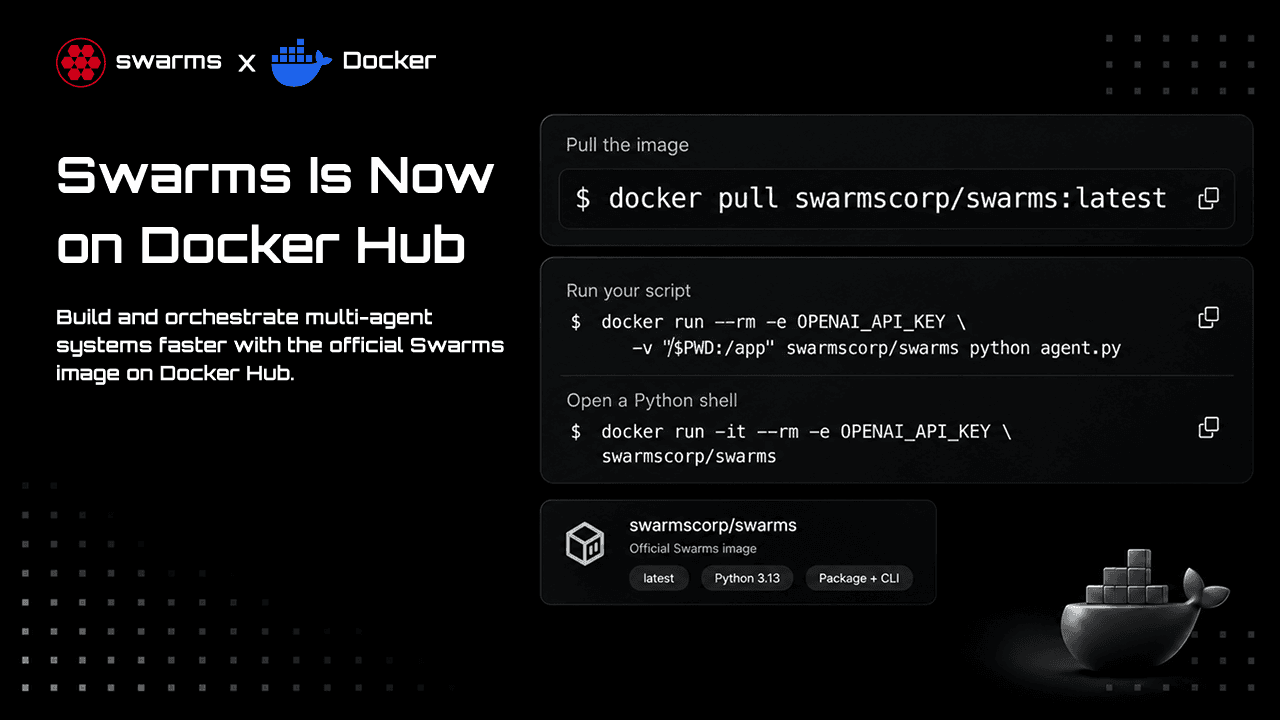
The official Swarms image, swarmscorp/swarms, is live on Docker Hub with Python 3.13, the swarms package and the swarms CLI for amd64 and arm64. Learn how to pull it, run your first agent, pass API keys safely, give agents tools, run multi-agent workflows, use Docker Compose and package your own agent as an image.
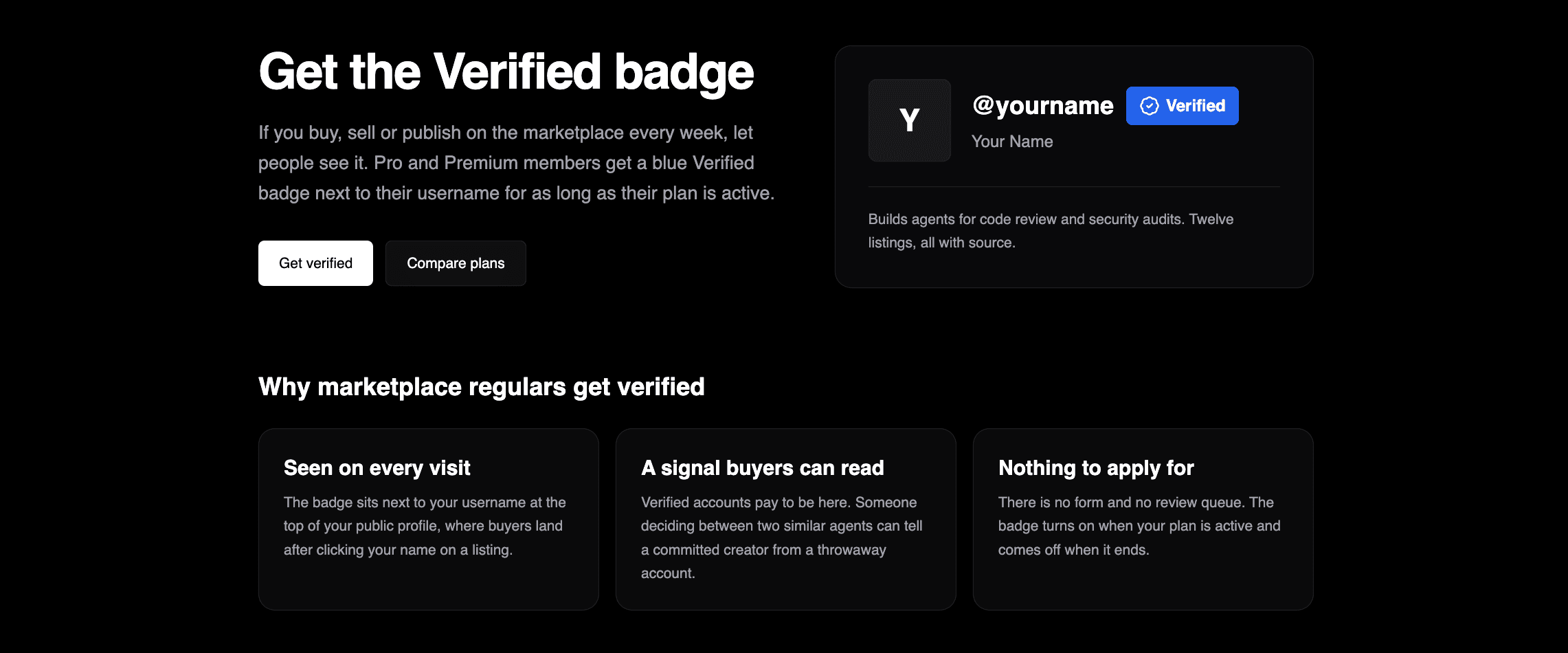
Pro and Premium members now get a blue Verified badge next to their username on swarms.world. Here is what the badge means, how it turns on and off, what each plan includes, and why creators who sell on the marketplace should get it.
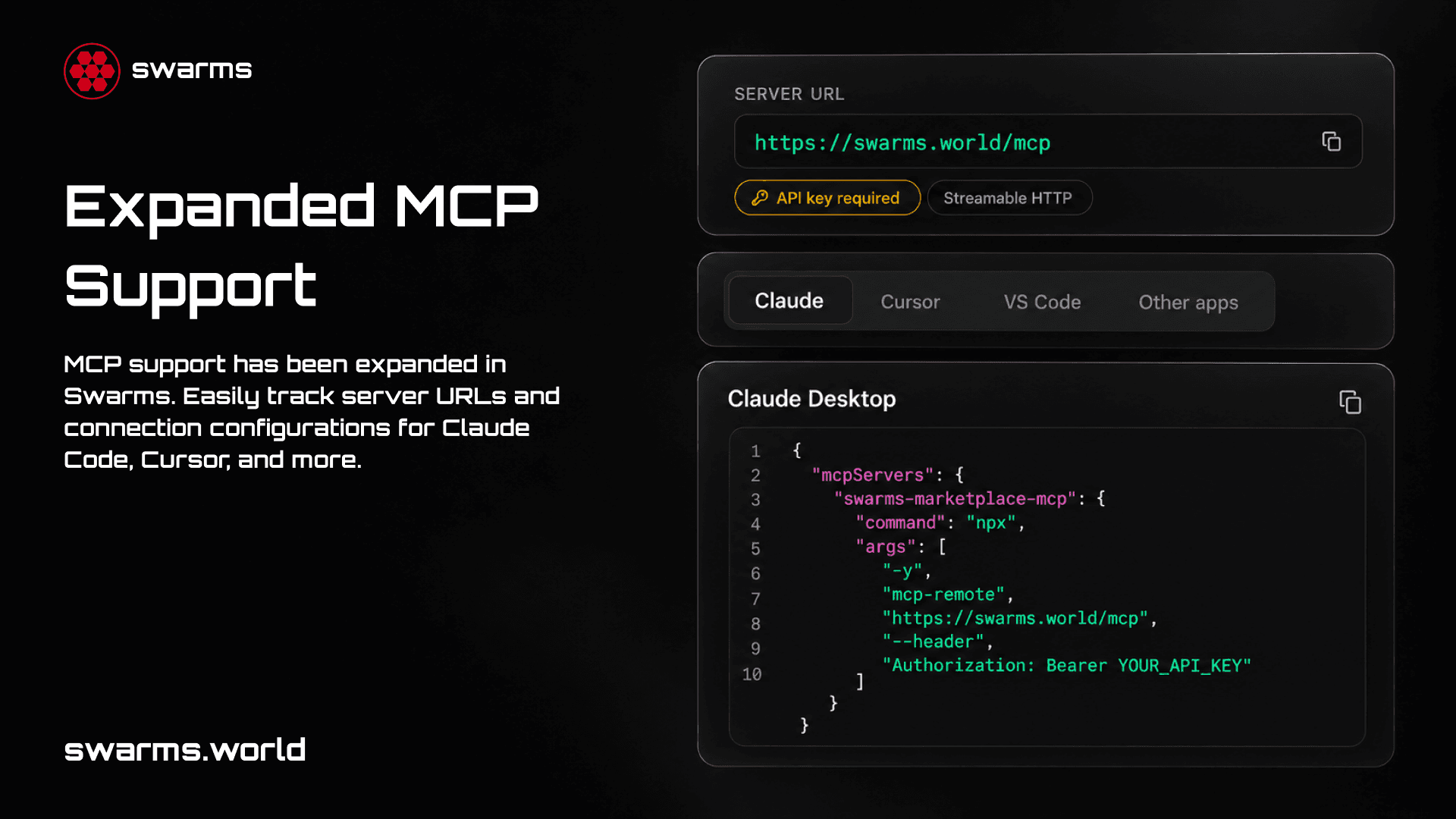
Publishing an MCP server on swarms.world now takes three steps: paste the URL, inspect it, publish. The marketplace connects to your server, reads its tools, and detects how it authenticates. Every MCP listing then gets a connect section with ready-to-paste configs for Claude, Cursor, VS Code, and other MCP clients. Here is how each piece works and how to publish your own server.