EngineeringProduct
Swarms v2.0: The First Multi-Agent Framework in Rust
Introducing the revolutionary Rust-based multi-agent framework that delivers unprecedented performance and memory safety for enterprise AI deployments.
Swarms Team8 min read

Introducing the revolutionary Rust-based multi-agent framework that delivers unprecedented performance and memory safety for enterprise AI deployments.
Today, we're excited to announce Swarms v2.0, the world's first production-ready multi-agent framework built entirely in Rust. This represents a monumental leap forward in AI agent orchestration, combining the performance and safety guarantees of Rust with the flexibility and power of multi-agent systems.
Rust's zero-cost abstractions and memory safety without garbage collection make it the perfect choice for high-performance AI workloads. Our benchmarks show 3-5x performance improvements over Python-based frameworks while maintaining the same level of functionality.
In enterprise environments, memory safety is non-negotiable. Rust's ownership system eliminates entire classes of bugs that can cause crashes or security vulnerabilities in production systems.
Multi-agent systems are inherently concurrent. Rust's fearless concurrency model allows us to build complex agent interaction patterns without the traditional headaches of race conditions and deadlocks.
use swarms_rs::{Agent, Swarm, Message};

#[derive(Clone)]
struct MyAgent {
    id: String,
    state: AgentState,
}

impl Agent for MyAgent {
    async fn process_message(&mut self, message: Message) -> Vec<Message> {
        // Process incoming message
        match message.content {
            MessageContent::Task(task) => {
                let result = self.execute_task(task).await;
                vec![Message::new(self.id.clone(), result)]
            }
            _ => vec![]
        }
    }
}

#[tokio::main]
async fn main() {
    let mut swarm = Swarm::new();

    // Add agents to the swarm
    for i in 0..10 {
        swarm.add_agent(MyAgent::new(format!("agent-{}", i)));
    }

    // Start the swarm
    swarm.start().await;
}| Framework | Agent Startup | Message Latency | Memory Usage |
|---|---|---|---|
| Swarms v1 (Python) | 50ms | 2ms | 100MB |
| Swarms v2 (Rust) | 5ms | 0.2ms | 20MB |
| Improvement | 10x | 10x | 5x |
cargo add swarms-rs// Before (Python)
class MyAgent:
def process_message(self, message):
return self.handle_task(message)
// After (Rust)
impl Agent for MyAgent {
async fn process_message(&mut self, message: Message) -> Vec<Message> {
self.handle_task(message).await
}
}let config = SwarmConfig::new()
.with_max_agents(1000)
.with_message_timeout(Duration::from_secs(30))
.with_retry_policy(RetryPolicy::exponential_backoff(3));# Create a new project
cargo new my-swarms-app
cd my-swarms-app
# Add Swarms dependency
cargo add swarms-rs
# Run the example
cargo run --example basic_swarmFROM rust:1.75 as builder
WORKDIR /app
COPY . .
RUN cargo build --release
FROM debian:bookworm-slim
COPY --from=builder /app/target/release/my-swarms-app /usr/local/bin/
CMD ["my-swarms-app"]Swarms v2.0 is fully open source under the MIT license. We believe in the power of community-driven development and welcome contributions from developers worldwide.
We're actively seeking contributors in the following areas:
Swarms v2.0 represents the future of multi-agent AI systems. By leveraging Rust's performance and safety guarantees, we've created a framework that can handle the most demanding enterprise workloads while maintaining the flexibility and ease of use that developers expect.
Whether you're building a simple automation workflow or a complex distributed AI system, Swarms v2.0 provides the foundation you need to succeed.
Ready to get started? Install Swarms v2.0 today and join the revolution in AI agent orchestration.
For more information, visit swarms.ai or join our Discord community.
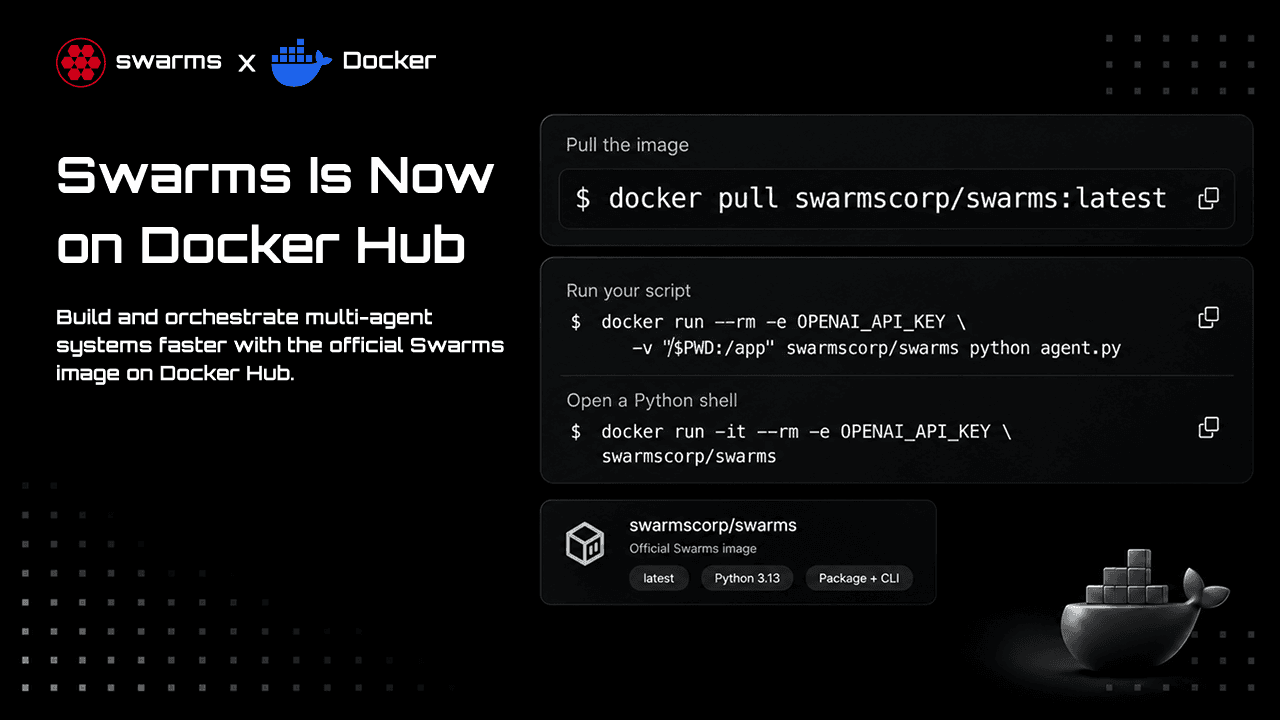
The official Swarms image, swarmscorp/swarms, is live on Docker Hub with Python 3.13, the swarms package and the swarms CLI for amd64 and arm64. Learn how to pull it, run your first agent, pass API keys safely, give agents tools, run multi-agent workflows, use Docker Compose and package your own agent as an image.
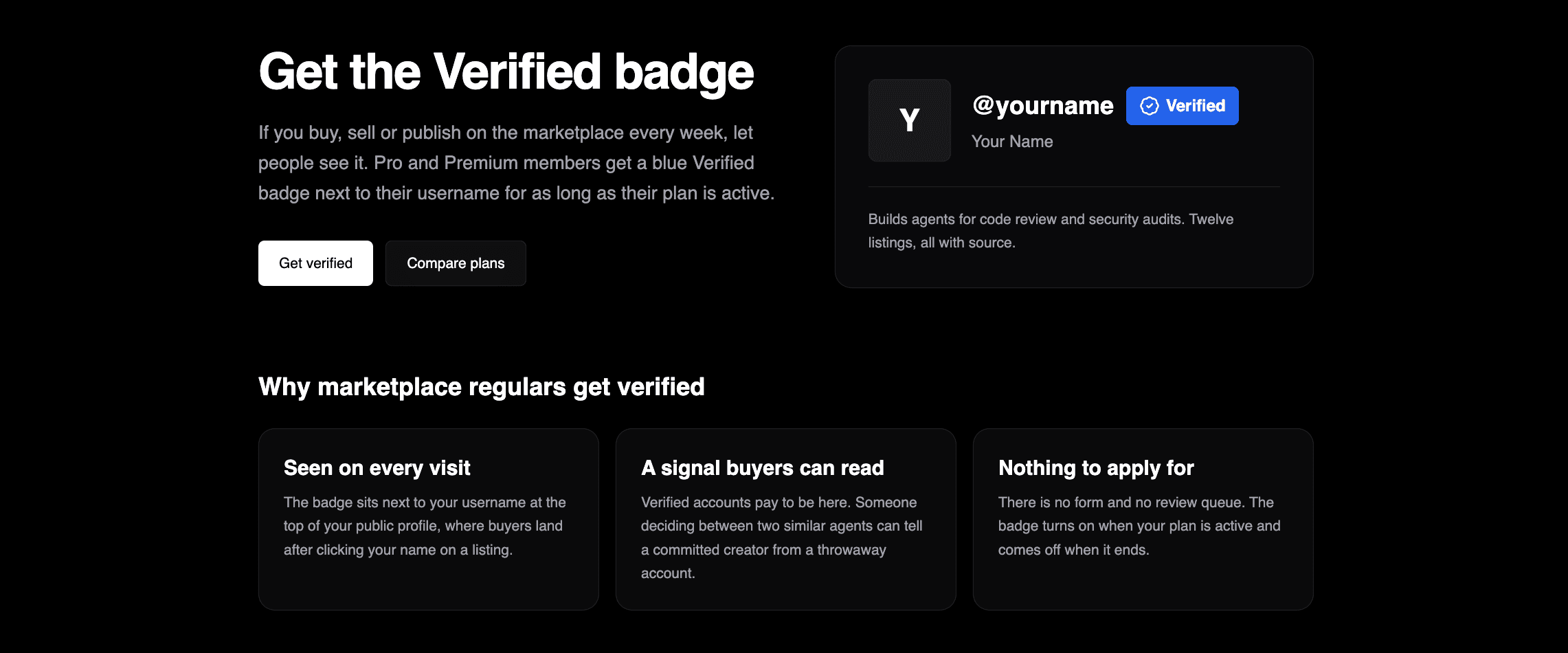
Pro and Premium members now get a blue Verified badge next to their username on swarms.world. Here is what the badge means, how it turns on and off, what each plan includes, and why creators who sell on the marketplace should get it.
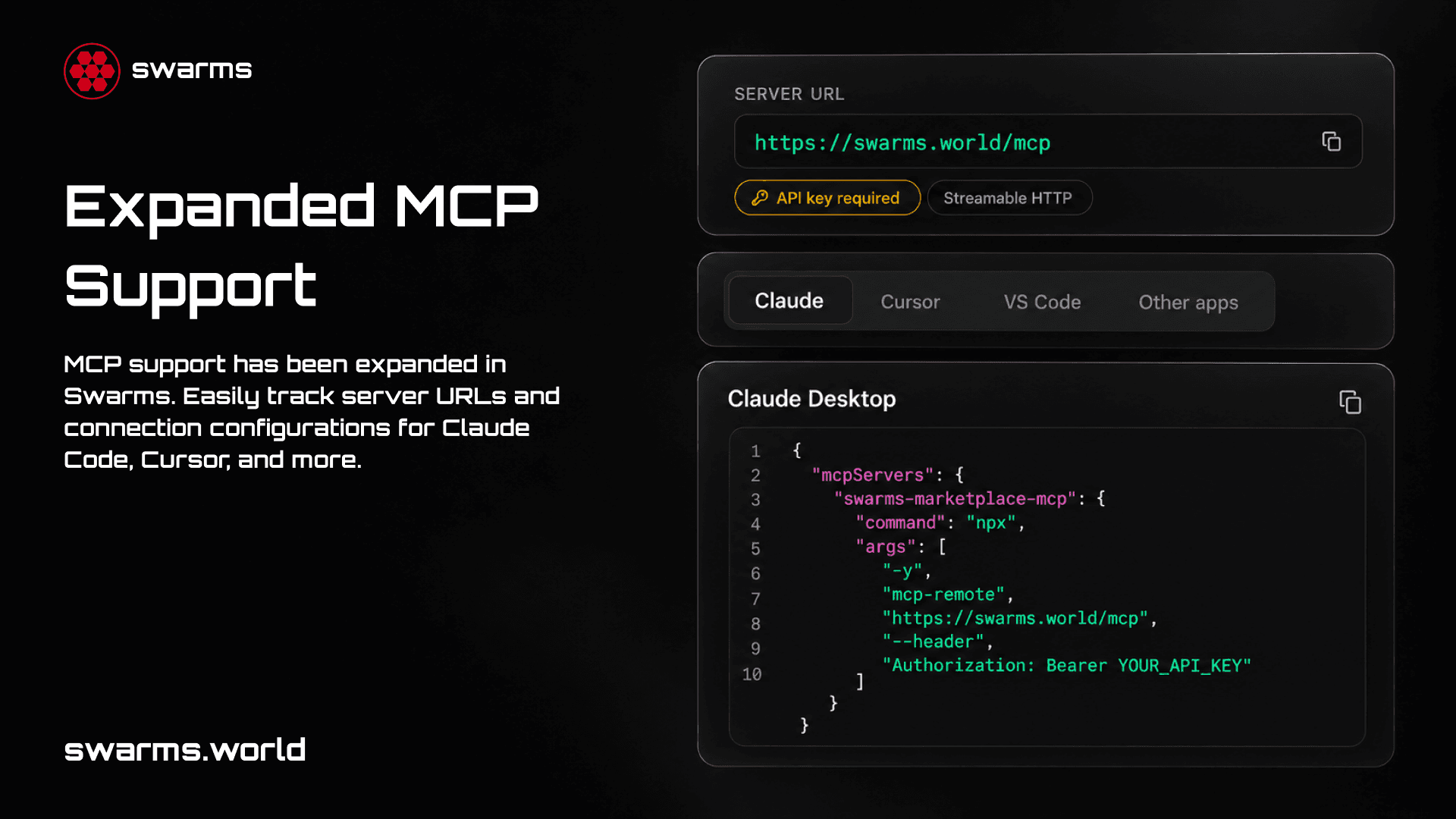
Publishing an MCP server on swarms.world now takes three steps: paste the URL, inspect it, publish. The marketplace connects to your server, reads its tools, and detects how it authenticates. Every MCP listing then gets a connect section with ready-to-paste configs for Claude, Cursor, VS Code, and other MCP clients. Here is how each piece works and how to publish your own server.