指南工程
多智能体系统的回退机制:处理 LLM 故障,杜绝静默错误
LLM 智能体错误处理与回退:失败的 swarm 现在会抛出异常,SwarmRouter 的 fallback_swarms 因此真正生效。为生产环境的智能体设计重试和回退模型。
Kye Gomez11 分钟阅读

LLM 智能体错误处理与回退:失败的 swarm 现在会抛出异常,SwarmRouter 的 fallback_swarms 因此真正生效。为生产环境的智能体设计重试和回退模型。
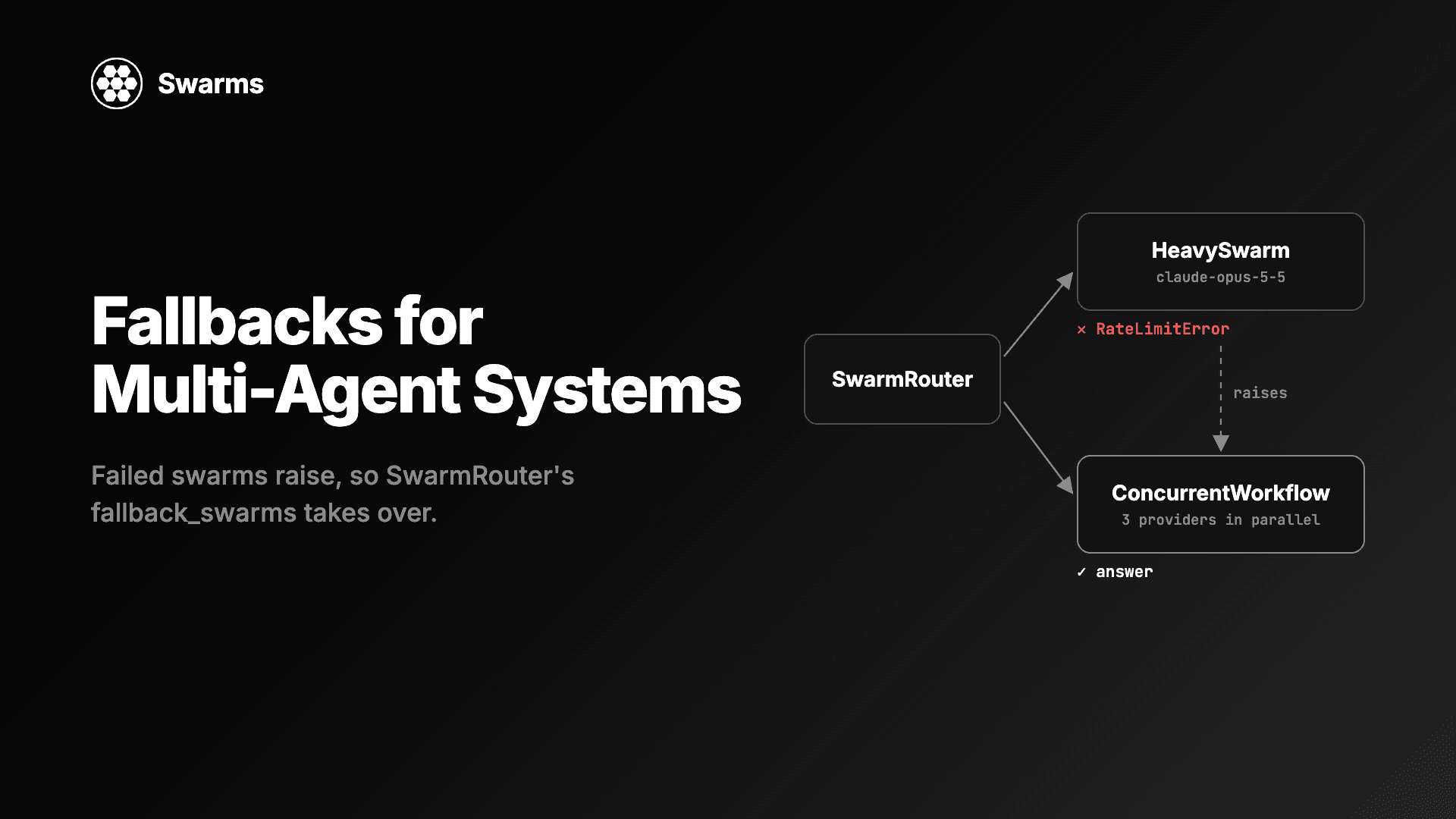
每个生产环境中的智能体迟早都会遇到 429、超时或服务商宕机。好的 LLM 智能体错误处理决定接下来发生什么:重试同一个模型,回退到另一个模型或服务商,回退到另一种多智能体结构,或者停下来告诉调用方。不过,回退要发挥作用,前提是故障可见。一个 swarm 如果捕获了异常,再把错误文本当作"答案"返回,它上层的每一级回退就都无从反应。
本指南介绍你需要预先考虑的故障类型、静默错误字符串为什么危险,以及回退机制在 Swarms v17「InterLink」 中如何工作。在这个版本里,失败的结构会抛出异常,所以 SwarmRouter(fallback_swarms=...) 终于能真正触发。你将为单个智能体配置重试和跨服务商的回退模型,搭建 swarm 级的回退链,让一个投票 swarm 在某个服务商宕机时照样完成,并为错误输出写一个校验循环。每个代码块都针对 Swarms 17.0.0 实际运行过,其中服务商调用是模拟的,这样我们可以按需让指定模型失败。
模型调用失败的方式有几种,各自需要不同的应对:
前三种会以服务商客户端的异常形式出现。后两种正是静默错误的来源。
回退是对异常的反应。如果某个组件捕获了异常,返回一个看起来像结果的字符串,调用方就分不清成功和失败,上面的每一层都会带着错误数据继续往下走。
Swarms v16 已经让失败的 LLM 调用抛出 AgentLLMError。InterLink 沿着这个错误向上追查各个结构,发现有几个会捕获它,再返回一个看起来像答案的东西。由于 SwarmRouter(fallback_swarms=...) 只在 swarm 抛出异常时才回退,下面这些情况里回退一次都没有触发:
| 结构 | v16 中的行为 | v17 |
|---|---|---|
HeavySwarm | 把 "Failed to generate questions in loop 1: ..." 当作答案返回,并把这次运行自动保存为 "completed" | 抛出异常;路由器回退(#2768) |
MixtureOfAgents | 聚合器失败时把 "Error: ..." 当作答案返回 | 抛出异常(#3063) |
MajorityVoting | 把失败投票者的异常当成它的一票,交给共识智能体 | 抛出异常;共识智能体不会运行(#3095) |
AuctionSwarm | 所有中标者都失败时,返回出价表 "Bids: A=0.9000, B=0.4000" | 抛出异常,并链接到排名第一的中标者的错误(#2493) |
AgentRearrange | 并行步骤中失败智能体的异常被写进对话,作为它的答案,下一步在此基础上继续 | 抛出异常,与顺序步骤原本的行为一致(#2456) |
MajorityVoting 这个例子最能说明问题。一条异常消息变成了一票,共识智能体把它和真实答案放在一起权衡,调用方拿到的是一个部分建立在错误字符串之上、看起来很笃定的共识。日志里没有任何迹象表明这次运行已经降级。
有两个结构仍然会把工作者的失败作为数据记录下来,这是有意为之,你需要知道是哪两个:MixtureOfAgents 某一层里失败的工作者会变成一条 "Error: ..." 答案,这样一个工作者出故障不会拖垮整个混合;ConcurrentWorkflow 默认 on_error="store",会把失败的智能体记录在角色 "<agent name> (failed)" 之下,让其他智能体继续完成。下文都会讲到。
pip install -U swarms示例混用了多个服务商,每个服务商都需要在环境变量中设置密钥:OPENAI_API_KEY、ANTHROPIC_API_KEY、GEMINI_API_KEY、DEEPSEEK_API_KEY、MISTRAL_API_KEY 和 GROQ_API_KEY。只需为你实际使用的服务商设置。
第一道防线是智能体本身。在 v17 中,Agent 接受一个 fallback_models 列表:第一项是主模型,模型失败时 run() 会沿列表往下走。retry_attempts 设置客户端在智能体换下一个模型之前对每个模型重试多少次。
from swarms import Agent

analyst = Agent(
    agent_name="Analyst",
    system_prompt="You are a financial analyst. Answer in three short bullet points.",
    fallback_models=[
        "anthropic/claude-sonnet-5-5",  # primary
        "gpt-5.4",                      # different provider, similar strength
        "gemini/gemini-2.5-pro",        # third provider, last resort
    ],
    retry_attempts=2,  # litellm retries each model twice before the agent moves on
    max_loops=1,
    output_type="final",
    print_on=False,
)

answer = analyst.run("What are the main risks in a 60/40 portfolio right now?")
print("served by:", analyst.model_name)
print(answer)
output_type="final" 让 run() 只返回回复(Agent 默认返回整段对话)。我们让所有 Anthropic 调用都返回 429 来运行它。智能体记录了一条警告,然后由第二个模型作答:
WARNING | swarms.structs.agent:run - Agent 'Analyst': 'anthropic/claude-sonnet-5-5' failed, trying 'gpt-5.4': Agent 'Analyst': model 'anthropic/claude-sonnet-5-5' failed: litellm.RateLimitError: ...
served by: gpt-5.4
运行结束后,agent.model_name 会给出实际提供服务的模型,便于记录日志和跟踪成本。下一次 run() 会重新从主模型开始,所以 Anthropic 偶尔出问题的一分钟不会让智能体永久停留在回退模型上。
在 v17 之前,失败的调用会在三层叠加的机制里重试:litellm 自身的 num_retries、Agent._run 里的尝试循环,以及 LLMManager 里的递归回退链。在默认 retry_attempts=3 下,一个挂掉的端点在智能体放弃之前,每个模型最多可能消耗 12 次调用(#2811)。
现在只有一个扁平循环,规则清楚:
retry_attempts 作为 litellm 的 num_retries 随每个请求发送,遇到限流时按指数退避。默认值为 3 时,每个模型最多 4 次调用。Agent.run 按顺序把 fallback_models 走一遍。三个模型加上默认设置,整次运行最坏情况是 12 次调用,而 v16 可能在每个模型上各花 12 次。AgentLLMError(模型调用失败)会让循环转向下一个模型。其他任何错误,比如你某个工具里的 bug,都会立即抛出,绝不会在下一个模型上重跑。messages 也会送到回退模型(#2806)。fallback_model_name="..." 写法仍然可用,它会在构造时并入 fallback_models。当列表里最后一个模型也失败时,run() 会抛出 AgentLLMError,并链接到服务商自己的异常。要限制单次请求的时长,可以通过 llm_args 传入 litellm 的 timeout,智能体会把它转发给每一次补全调用:
from swarms import Agent, AgentLLMError

summarizer = Agent(
    agent_name="Summarizer",
    system_prompt="Summarize the text in two sentences.",
    fallback_models=["gpt-5.4-mini", "anthropic/claude-haiku-5-5"],
    retry_attempts=1,
    llm_args={"timeout": 20},  # seconds per request, passed through to litellm
    max_loops=1,
    output_type="final",
    print_on=False,
)

try:
    print(summarizer.run("Summarize this incident report: ..."))
except AgentLLMError as error:
    # Raised only after the last model in fallback_models has failed.
    print("every model failed:", error)
    print("provider error:", type(error.__cause__).__name__)
这里两个模型都小而便宜,适合高调用量的摘要器。在我们的测试中,OpenAI 的请求超时,Anthropic 返回 500,于是运行进入了 except 分支:
every model failed: Agent 'Summarizer': model 'anthropic/claude-haiku-5-5' failed: litellm.InternalServerError: ...
provider error: InternalServerError
超时会立即报告,并附带原始错误。在 v17 之前,网络故障会先花 3 秒探测 8.8.8.8:53,然后报告 "No internet connection",把真正的原因藏了起来(#2729)。
同一个服务商上的回退模型能防住某个模型特有的问题。但在服务商宕机或整个账号被限流时它毫无用处,因为两个模型共用同一个端点和同一份额度。要真正覆盖这些情况,下一项应该放在另一个服务商上:
anthropic/claude-sonnet-5-5 回退到 gpt-5.4 或 gemini/gemini-2.5-pro 都很合适;从前沿模型回退到小模型,产出可能过不了下游的检查。temperature 和 top_p,所以列表中包含 Claude 模型的智能体不要设置这两个参数。智能体级回退处理的是单次模型调用失败。有时候整个结构都会失败:比如一个内部模型全在同一服务商上的 HeavySwarm,或者一种在给定输入下无法运行的架构。SwarmRouter 接受 fallback_swarms,即主 swarm 抛出异常时按顺序尝试的 swarm 类型列表。每个回退都用相同的智能体和配置构建,第一个成功完成的胜出。
from swarms import Agent, SwarmRouter

# Your own agents, spread over three providers that are not Anthropic.
analysts = [
    Agent(
        agent_name="Macro-Analyst",
        system_prompt="Assess the macroeconomic picture in five bullet points.",
        model_name="gpt-5.4-mini",
        max_loops=1,
        print_on=False,
    ),
    Agent(
        agent_name="Sector-Analyst",
        system_prompt="Assess the sector and company-level picture in five bullet points.",
        model_name="gemini/gemini-2.5-pro",
        max_loops=1,
        print_on=False,
    ),
    Agent(
        agent_name="Risk-Analyst",
        system_prompt="List the five largest downside risks.",
        model_name="deepseek/deepseek-v4-pro",
        max_loops=1,
        print_on=False,
    ),
]

router = SwarmRouter(
    name="market-brief",
    agents=analysts,
    swarm_type="HeavySwarm",  # primary: HeavySwarm's built-in question agent and workers
    heavy_swarm_question_agent_model_name="anthropic/claude-opus-5-5",
    heavy_swarm_worker_model_name="anthropic/claude-sonnet-5-5",
    heavy_swarm_swarm_show_output=False,
    fallback_swarms=["ConcurrentWorkflow"],  # your agents, on other providers
    output_type="str-all-except-first",  # every analyst's answer
)

result = router.run("Write a one-page brief on the US semiconductor sector.")

print("served by:", router.active_swarm_type)
for attempt in router.fallback_attempts:
    print("failed:", attempt["swarm_type"], "->", type(attempt["error"]).__name__)
print(result)
主 swarm 是一个 HeavySwarm,由 Claude Opus 规划问题、Claude Sonnet 做研究,在 Anthropic 状态良好时这是更强的选项。回退是一个普通的 ConcurrentWorkflow,运行你分布在 OpenAI、Google 和 DeepSeek 上的三位分析师。在 Anthropic 返回 429 的情况下,HeavySwarm 的提问智能体在第一次调用时就失败了,路由器记录了 SwarmRouter swarm 'HeavySwarm' failed: litellm.RateLimitError: ... Falling back to 'ConcurrentWorkflow'.,运行输出:
served by: ConcurrentWorkflow
failed: HeavySwarm -> RateLimitError
后面跟着三位分析师的回答。在 v16 中,同样的配置会把 "Failed to generate questions in loop 1: ..." 当作简报返回,回退根本不会运行。
有两个属性告诉你发生了什么:router.active_swarm_type 是为最近一次运行提供服务的 swarm 类型,router.fallback_attempts 为每个失败的 swarm 保存一条 {"swarm_type", "error"} 记录。设置 autosave=True 时,运行元数据会同时记录这两项。如果不设置 fallback_swarms,主 swarm 的错误会原样向上传播。
ConcurrentWorkflow 在某个智能体失败时会继续运行:默认(on_error="store")它把错误记录为该智能体的答案,角色为 "<agent name> (failed)"。路由器看到的是一次完成的运行,所以如果部分结果对你很重要,就去检查对话。下面接着上面的例子:
# ConcurrentWorkflow records a failed agent as an "Error: ..." row instead of raising,
# so check the fallback's conversation for those rows.
failed = [
    message["role"]
    for message in router.conversation.conversation_history
    if message["role"].endswith("(failed)")
]
print("failed inside the fallback:", failed)
在我们的测试中 Gemini 也返回了 500,这段代码输出 failed inside the fallback: ['Sector-Analyst (failed)']。直接使用 ConcurrentWorkflow 时,可以传入 on_error="raise",让整次运行失败。在路由器里,更简单的办法是给每位分析师配置自己的 fallback_models,这样智能体会在工作流看到错误之前就恢复过来。
如果主 swarm 和每个回退都抛出异常,run() 会抛出 SwarmRouterRunError(从 swarms.structs.swarm_router 导入),并链接到最后一次尝试的错误,router.fallback_attempts 里仍然列出每一次尝试。这就是该通知值班人员,或者向用户返回明确错误的信号。
投票和共识类结构是静默错误危害最大的地方,所以很适合用来观察 v17 的行为。三个分布在三个服务商上的投票者对一张支持工单做分诊:
from swarms import Agent, AgentLLMError, MajorityVoting

question = "Should this support ticket be escalated? Answer YES or NO with one reason."

voters = [
    Agent(
        agent_name="Voter-Groq",
        system_prompt="You triage support tickets.",
        model_name="groq/openai/gpt-oss-120b",
        max_loops=1,
        print_on=False,
    ),
    Agent(
        agent_name="Voter-Mistral",
        system_prompt="You triage support tickets.",
        model_name="mistral/mistral-large-latest",
        max_loops=1,
        print_on=False,
    ),
    Agent(
        agent_name="Voter-OpenAI",
        system_prompt="You triage support tickets.",
        model_name="gpt-5.4-mini",
        max_loops=1,
        print_on=False,
    ),
]

vote = MajorityVoting(
    agents=voters,
    consensus_agent_model_name="gemini/gemini-2.5-pro",
    additional_consensus_agent_kwargs={"print_on": False},
    output_type="final",
)

try:
    print(vote.run(question))
except AgentLLMError as error:
    print("vote failed:", type(error).__name__, error)
投票者用的是快速、便宜的模型,因为投票会成倍增加调用次数;共识智能体是 Gemini 2.5 Pro,一个更强的裁判。(这里不要把 Claude 放在共识位置:MajorityVoting 内置的共识智能体开启了动态温度,请求中会带上随机的 temperature,当前的 Claude 模型会拒绝它。)
在 Groq 返回 500 的情况下,运行输出 vote failed: AgentLLMError Agent 'Voter-Groq': model 'groq/openai/gpt-oss-120b' failed: ...,共识模型一次都没有被调用。当一个投票者无法恢复时,这就是正确的结果。在 v16 中,这段错误文本会被算作 Groq 的一票。
要让投票扛过这次宕机,给容易出问题的投票者配置一个另一服务商上的回退。下面接着上一个代码块:
voters[0] = Agent(
    agent_name="Voter-Groq",
    system_prompt="You triage support tickets.",
    fallback_models=["groq/openai/gpt-oss-120b", "deepseek/deepseek-v4-pro"],
    max_loops=1,
    print_on=False,
)

vote = MajorityVoting(
    agents=voters,
    consensus_agent_model_name="gemini/gemini-2.5-pro",
    additional_consensus_agent_kwargs={"print_on": False},
    output_type="final",
)
print(vote.run(question))
print("Voter-Groq answered with:", voters[0].model_name)
现在投票顺利完成,共识智能体基于三张真实的票运行,最后一行输出 Voter-Groq answered with: deepseek/deepseek-v4-pro。两层机制配合工作:智能体回退吸收服务商故障,结构只在某个智能体确实无法作答时才抛出异常。
模型返回格式错误的输出时不会抛出异常,所以 fallback_models 帮不上忙。在你自己的代码里把"输出未通过校验"当作一种失败,自己遍历模型列表:
import json

from swarms import Agent, AgentLLMError

REQUIRED = {"vendor", "total", "currency"}
MODELS = ["gpt-5.4-mini", "anthropic/claude-haiku-5-5"]  # cheap first, then another provider


def extract_invoice(text: str) -> dict:
    problems = []
    for model in MODELS:
        agent = Agent(
            agent_name="Invoice-Extractor",
            system_prompt=(
                "Extract vendor, total and currency from the invoice. "
                "Reply with one JSON object and nothing else."
            ),
            model_name=model,
            max_loops=1,
            output_type="final",
            print_on=False,
        )
        try:
            data = json.loads(agent.run(text))
            if not isinstance(data, dict):
                raise ValueError("expected a JSON object")
            missing = REQUIRED - data.keys()
            if missing:
                raise ValueError(f"missing fields {sorted(missing)}")
            return data
        except (AgentLLMError, ValueError) as error:  # json.JSONDecodeError is a ValueError
            problems.append(f"{model}: {error}")
    raise RuntimeError("no model produced a valid invoice:\n" + "\n".join(problems))


print(extract_invoice("ACME Corp. Invoice 1043. Total due: 1,250.00 EUR."))
在我们的测试中,第一个模型把 JSON 包在一句客套话里,json.loads 失败,于是返回了第二个模型给出的有效对象:{'vendor': 'ACME Corp.', 'total': 1250.0, 'currency': 'EUR'}。两个模型都失败时,RuntimeError 会列出每个模型的问题;在我们的失败测试中,第一个模型是缺少字段,第二个模型是限流错误。这个函数每次尝试都新建一个智能体,这样第二个模型看不到第一个模型的错误答案。
fallback_models 列表。 这是防范 429 和宕机成本最低的手段。retry_attempts + 1,乘以模型数量就是最坏情况。对延迟敏感的路径可以调低 retry_attempts,更多依赖回退。llm_args={"timeout": ...},让挂起的请求及时转到回退。fallback_swarms 处理结构级故障,每次运行后读取 router.active_swarm_type 和 router.fallback_attempts,记录是哪条路径提供了服务。ConcurrentWorkflow 里的 "(failed)" 行,以及 MixtureOfAgents 里 "Error: ..." 形式的工作者答案。AgentLLMError 和 SwarmRouterRunError,返回明确的失败。避免返回占位字符串,那样会在更上一层重新制造静默错误问题。GroupChat 的线程池大小;花名册很大时,如果开始出现 429,请设置 max_workers 或 max_parallel_nodes。这些 bug 背后更普遍的模式,即结构在出错时返回看似合理的输出,是 多智能体系统的失败模式 一文的主题。如果你想持久记录一次运行中每个智能体说了什么(失败的运行不会写入任何内容),请看 用 SQLite 作为 AI 智能体的共享记忆。
给 Agent 传入 fallback_models,主模型放在第一位:Agent(fallback_models=["anthropic/claude-sonnet-5-5", "gpt-5.4", "gemini/gemini-2.5-pro"])。模型调用失败时,run() 会尝试列表中的下一个模型,每次新的运行都会重新从第一个模型开始。
retry_attempts 是客户端对同一个模型重试的次数(它作为 num_retries 发送给 litellm,遇到限流时按指数退避)。fallback_models 是有序的模型列表,某个模型用尽重试仍失败后,智能体会沿着它换到下一个模型。
fallback_swarms 只在主 swarm 抛出异常时运行。在 v16 中,HeavySwarm、MixtureOfAgents、MajorityVoting、AuctionSwarm 和 AgentRearrange 会捕获部分故障,把错误文本或出价表当作答案返回,所以路由器看到的是成功。在 v17 中它们会抛出异常,路由器随之回退。
智能体会抛出 AgentLLMError,并链接到最后一个服务商错误。配置了 fallback_swarms 的 SwarmRouter 会抛出 SwarmRouterRunError,router.fallback_attempts 会列出它尝试过的每种 swarm 类型的错误。
通常应该。限流和宕机往往影响整个服务商或整个账号,同一服务商上的回退经常因为同样的原因失败。选择另一个服务商上能力相近的模型。
pip install -U swarms完整的 v17 变更列表,包括本指南背后的每一项修复,请看 Swarms v17「InterLink」更新日志。API 参考在 docs.swarms.world,源代码在 GitHub。
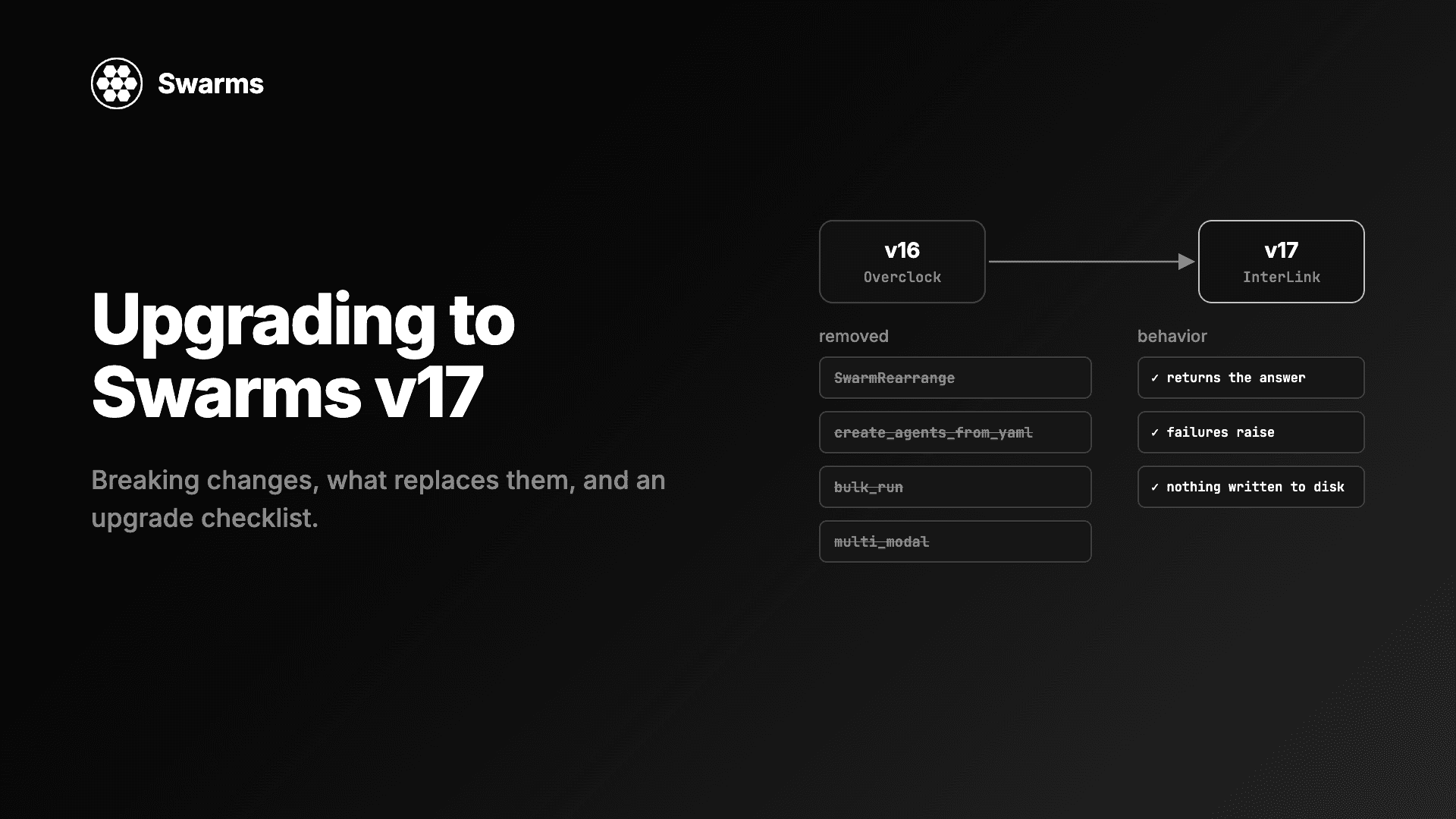
Swarms v17 升级与迁移指南:InterLink 中移除的每个类和参数、应该改用什么、变更的默认行为,以及一份升级检查清单。
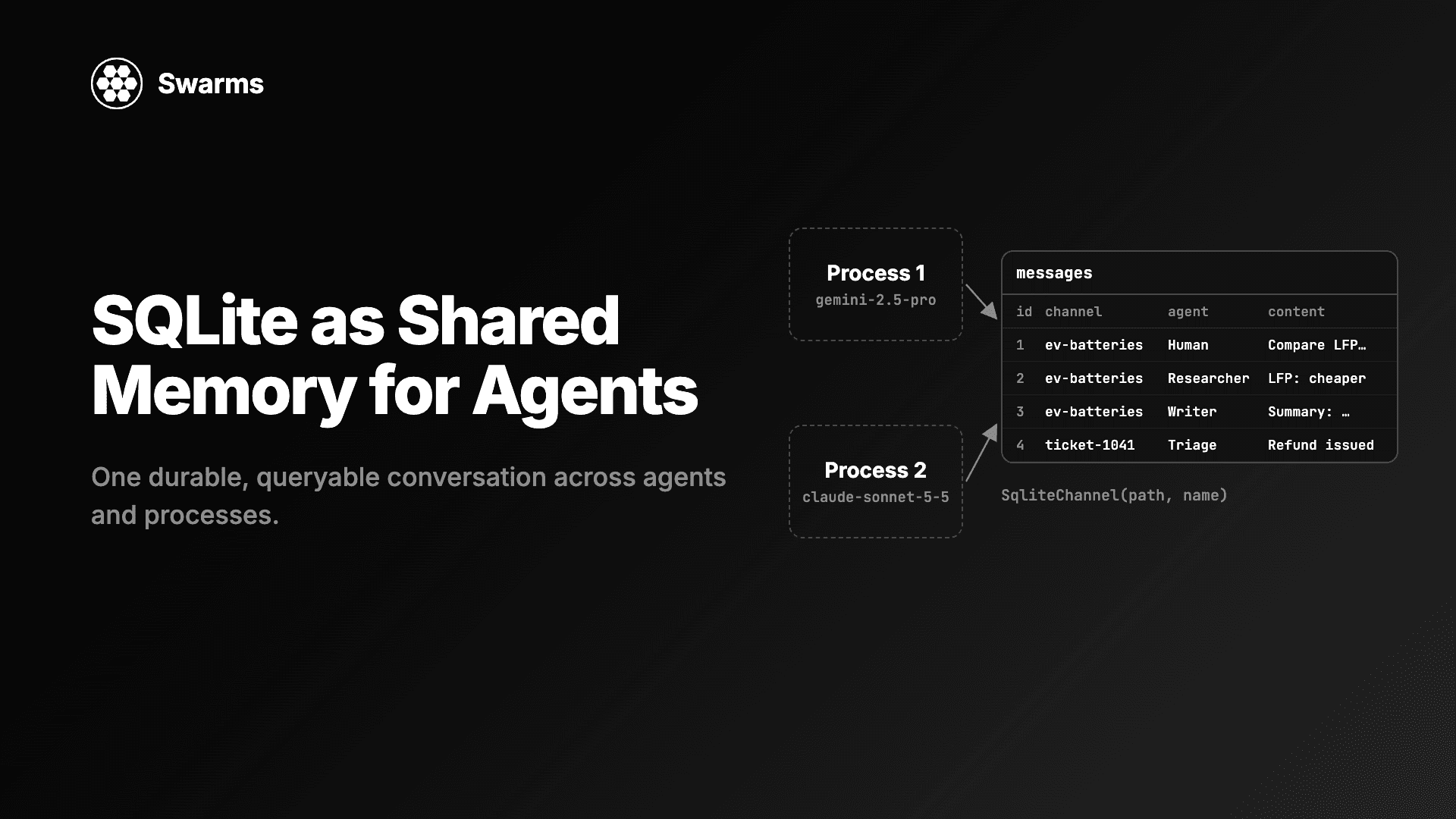
用 SQLite 实现 AI 智能体的共享记忆:SqliteChannel 让多个智能体和进程共用一份持久、可查询的对话历史。用 Swarms 存储、共享这份记忆,并对它运行 SQL。
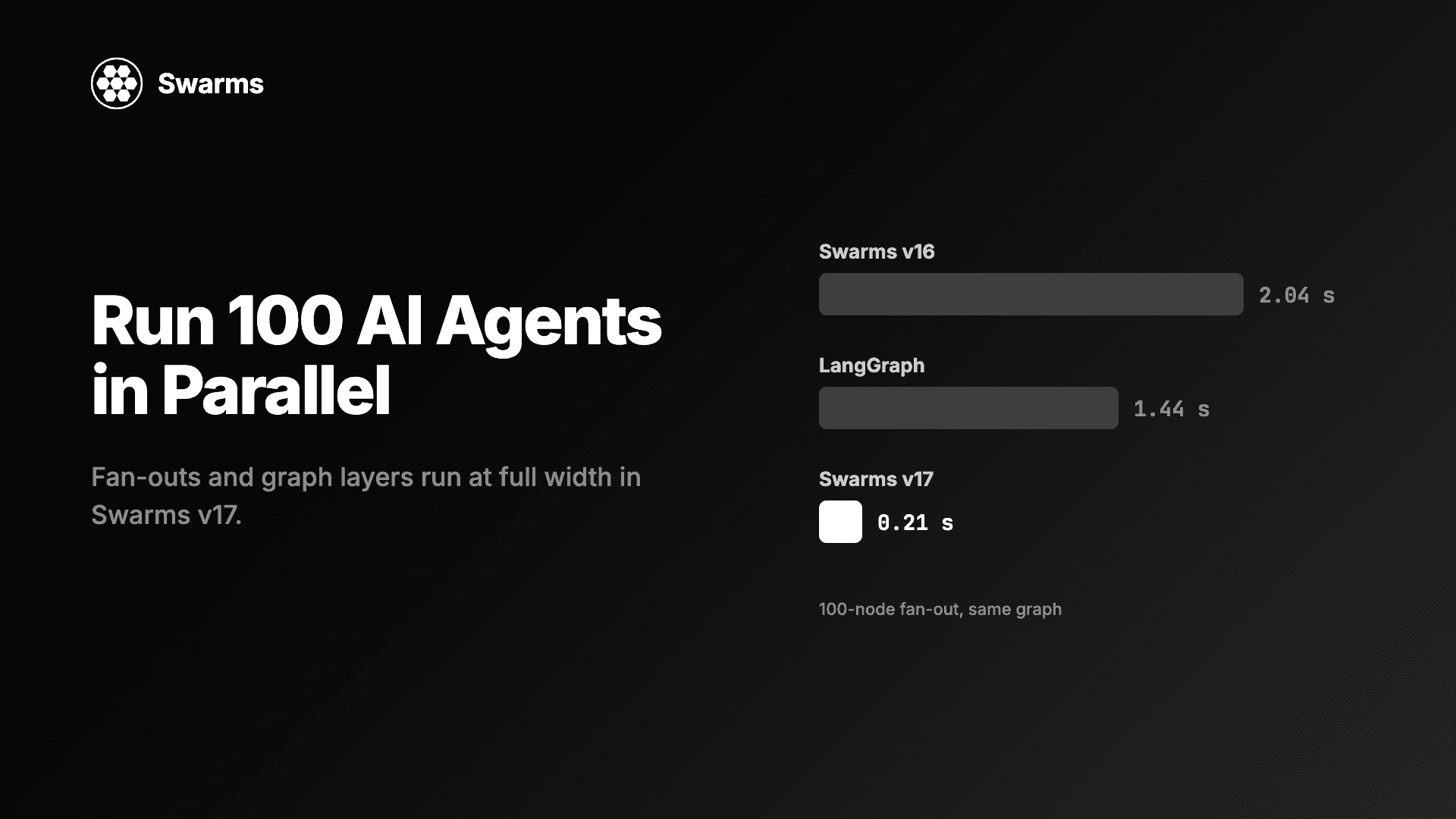
在 Python 中并行运行 AI 智能体:Swarms v17 中 100 个智能体的扇出只需 0.21 秒,此前为 2.04 秒(LangGraph:1.44 秒)。附满宽并发与异步上限的代码。